LIFE FOR SEEDS – Spring Sowing in Budinci
M. Matjašec, 23. 3. 2026
In Budinci, we have begun establishing new grasslands that will combine the characteristics of dry and extensively managed meadows—typical of the surrounding landscape.
At the end of last year, the Public Institution Goričko Nature Park purchased two arable fields in Budinci and one in Pertoča. As the institution primarily manages grasslands, the LIFE FOR SEEDS project has provided an opportunity to restore these areas back into meadows. This spring, both fields in Budinci were sown with a local seed mixture, while sowing in Pertoča will follow shortly.
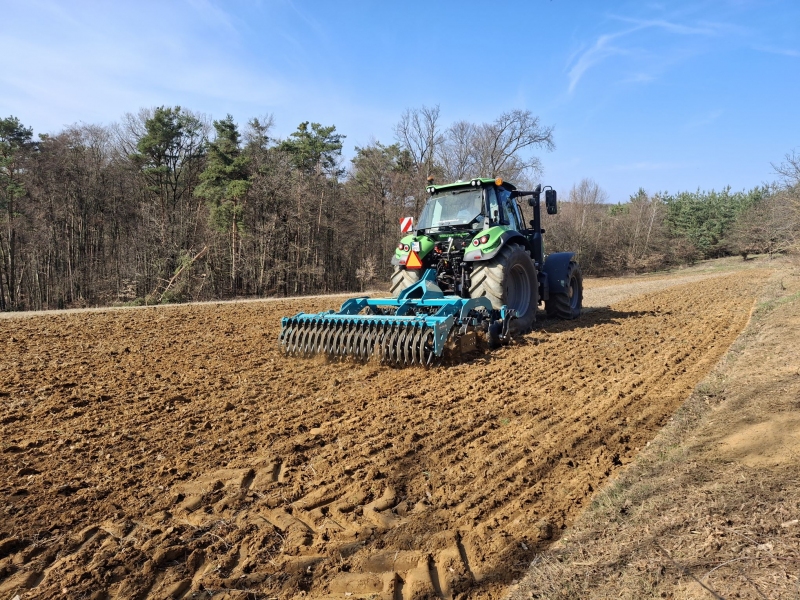
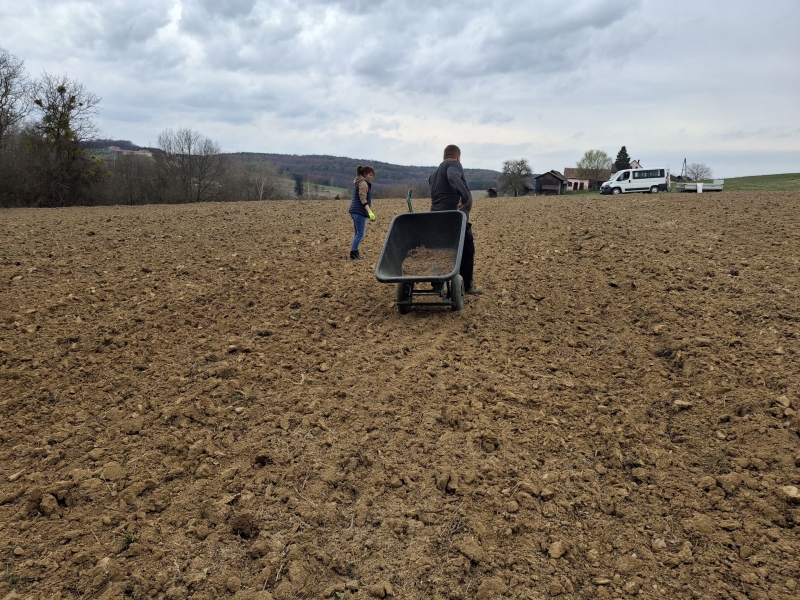
Until now, sowing within the project has mainly taken place in autumn. This time, however, we are interested in assessing how successful spring sowing can be, even if only over a single season. For the initial establishment, we used 47 kg of dry seed mixture. However, sowing alone does not guarantee a species-rich and diverse meadow.
Nature itself plays a crucial role. Many plants will emerge from the existing soil seed bank, as well as from seeds dispersed by wind from nearby grasslands. These natural processes will gradually complement the sown mixture and contribute to the development of a truly diverse meadow.
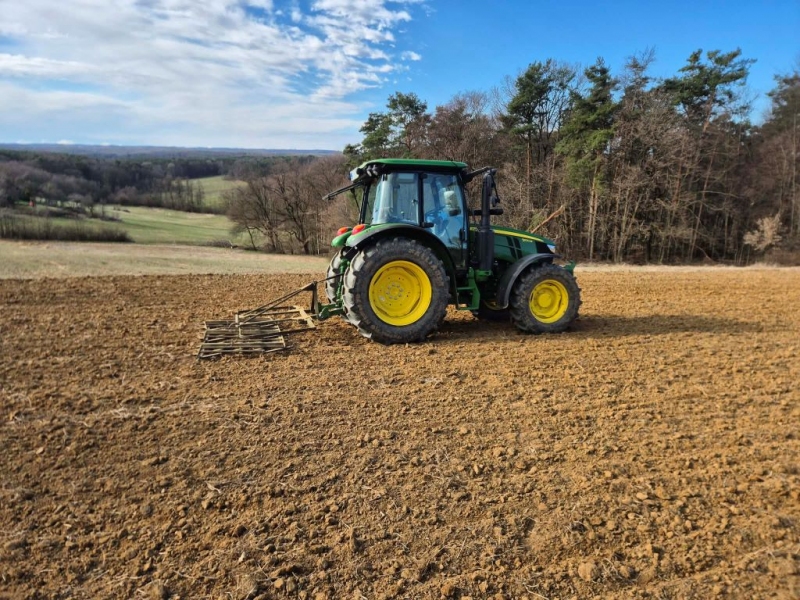
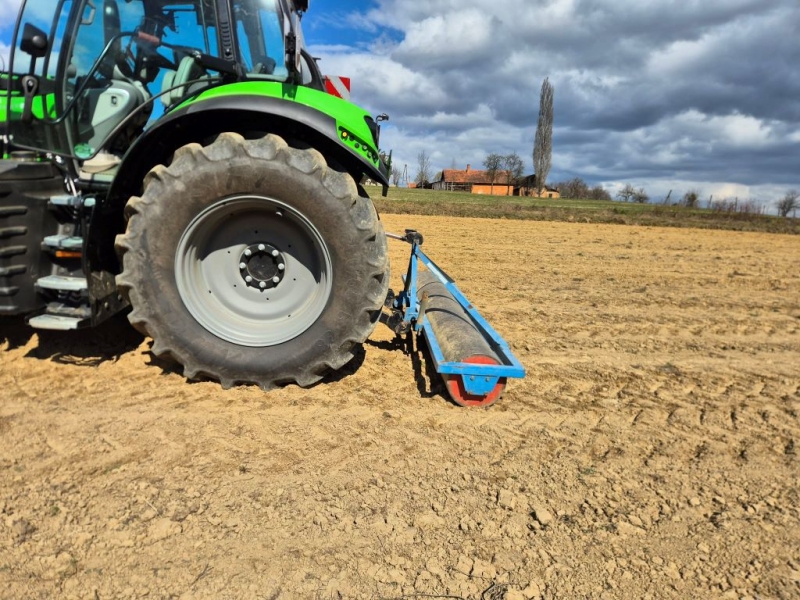
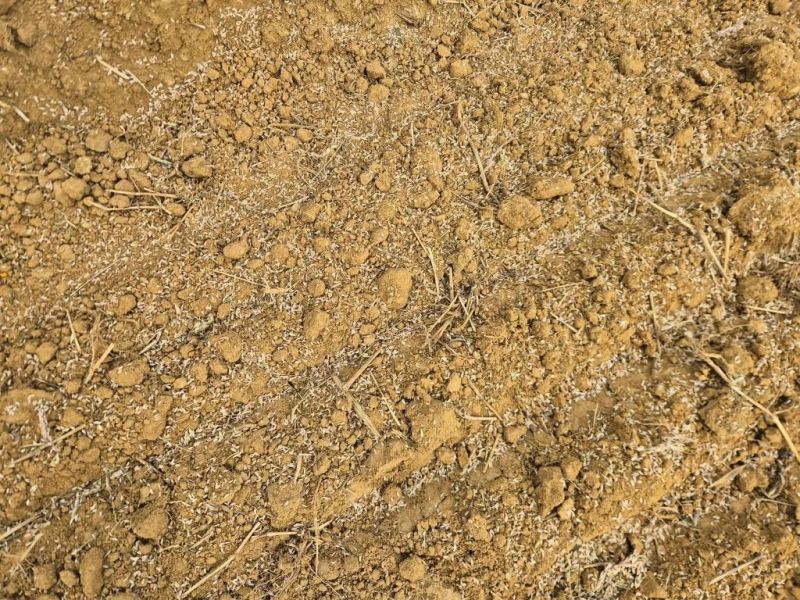
Before sowing, the fields had to be carefully prepared. The soil was first cultivated using a rotary harrow to loosen and level the surface, creating suitable conditions for small seeds. The seed mixture was then evenly distributed, lightly incorporated into the soil, and the surface rolled. This improved seed-to-soil contact and created favourable conditions for germination.
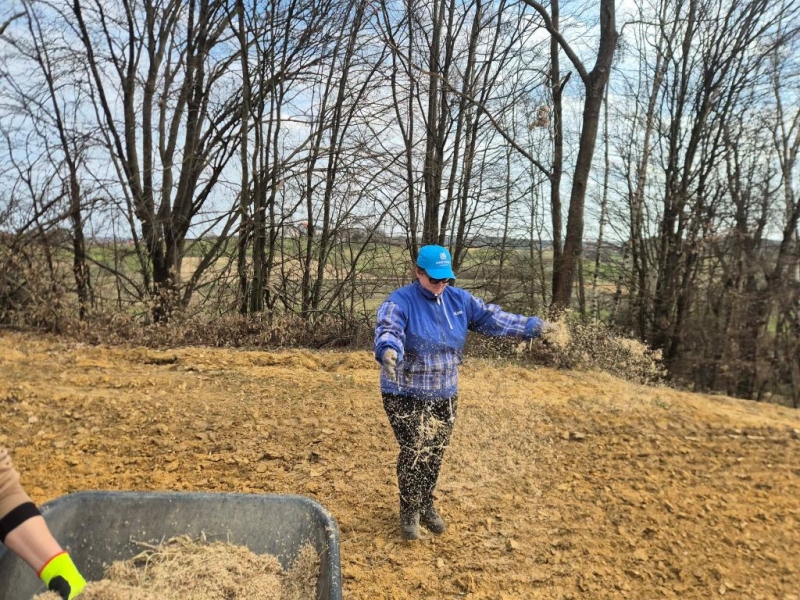
The most important phase is now beginning—the gradual transformation of arable land into meadow. With appropriate management, a diverse grassland community will develop here, benefiting both nature and the landscape.
Grasslands are extremely valuable habitats. They support a wide range of plant species that provide food for pollinators such as bees and butterflies, while also offering shelter to birds and other wildlife. By establishing meadows using local seed mixtures, we help preserve both the characteristic landscape and the genetic diversity of plant species.
Mowing is also a key part of grassland management. It is recommended that the first cut takes place only after most plants have flowered and set seed. This allows natural regeneration and ensures continued food resources for pollinators.
At the same time, agricultural use must also be considered. Farmers require high-quality forage for livestock, so it is essential to balance production with nature conservation. Good practice includes leaving parts of the meadow uncut or mowing in stages. This provides safe refuge for wildlife and allows plants to complete their life cycle.