LIFE FOR SEEDS: The Final Sowing of Seed Mixtures in Goričko
M. Matjašec, 11. 11. 2025
In 2025, we completed the restoration of the meadows as part of the project.
Meadows are priceless part of our landscape. They provide a home for many plants and animals, protect the soil, help to keep water in the ground, clean the air, and play an important role in supporting biodiversity and tackling climate change. They also provide high-quality fodder and form part of our cultural landscape. But meadows are increasingly at risk. Intensive farming, the abandonment of mowing and grazing, urban development, and climate change are all endangering their survival. The consequences are evident: fewer species, a decline in pollinators, and the loss of the landscape’s characteristic appearance.
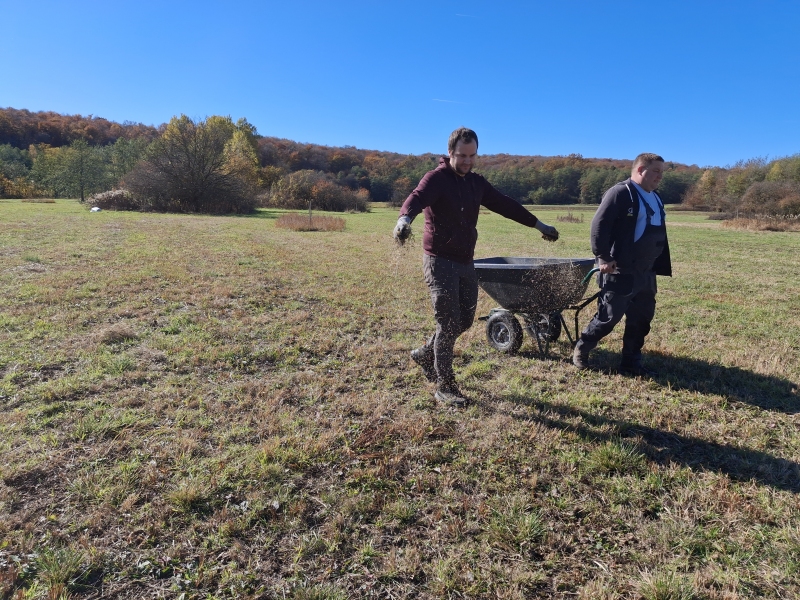
Restoration of meadows through manual sowing of local seed mixtures in Motvarjevci M. Matjašec
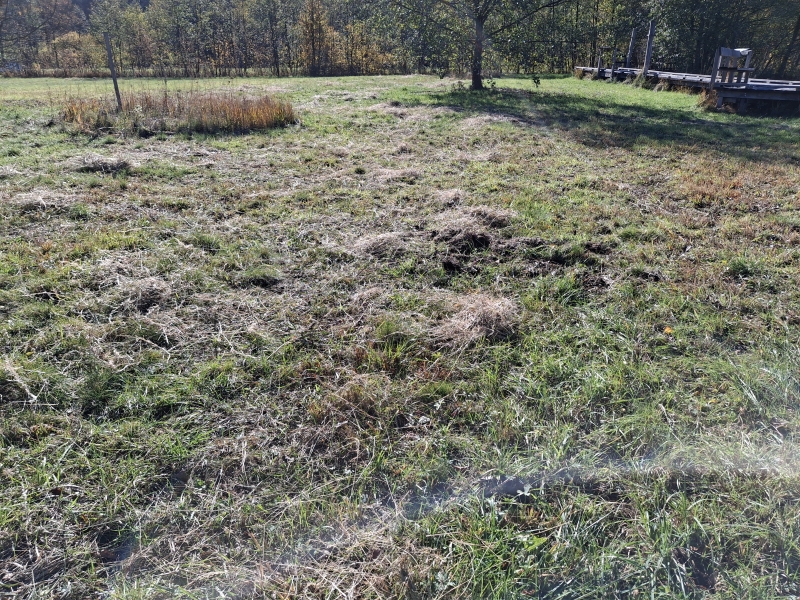
That’s why restoring meadows is so important. It helps preserve nature’s diversity and ensures that land is used in a sustainable way. We restore meadows when the turf becomes poor, weeds start to take over, or after major changes in the environment – usually in spring or autumn. There are several ways to do this: by letting nature take its course (natural succession), by reducing intensive use, by sowing seed mixtures, or by transferring seeds or topsoil from healthy meadows. The best method depends on the condition of the meadow, the restoration goals, and the natural features of the area.
As part of the project Conservation of priority grassland habitat types in Slovenia through the establishment of a seed bank and in situ restoration – or, in short, LIFE FOR SEEDS – we carried out the last sowing of seed mixtures on meadows under restoration this autumn. This time, we focused on two grassland habitat types: 6410 (wet meadows) and 6510 (extensive meadows). These two types are quite common in the Goričko region. The aim of our project was to find out whether using seed mixtures can help speed up the restoration of meadows, even in areas where nearby meadows already contain enough seeds that could naturally spread to the restoration sites by wind or animals. The effects of the sowing will be assessed through a vegetation survey planned for next spring. The restoration of dry meadows was already completed two years ago.
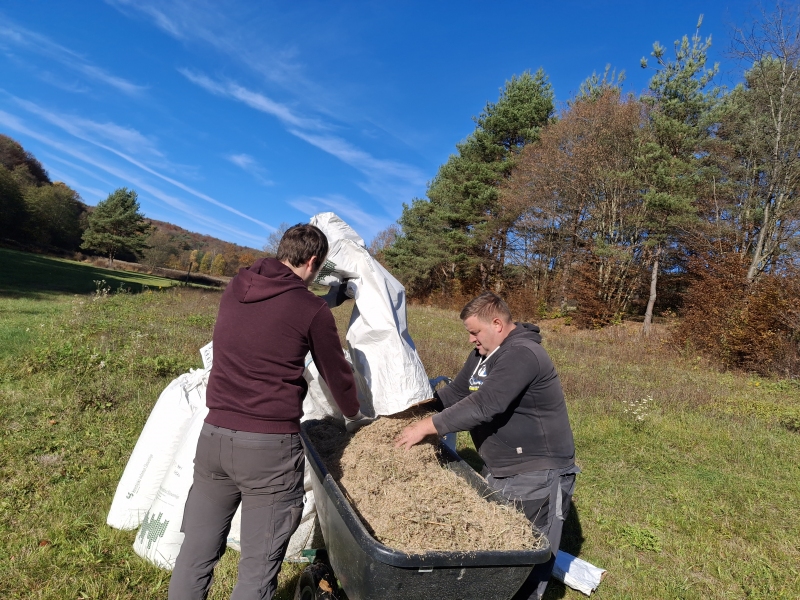
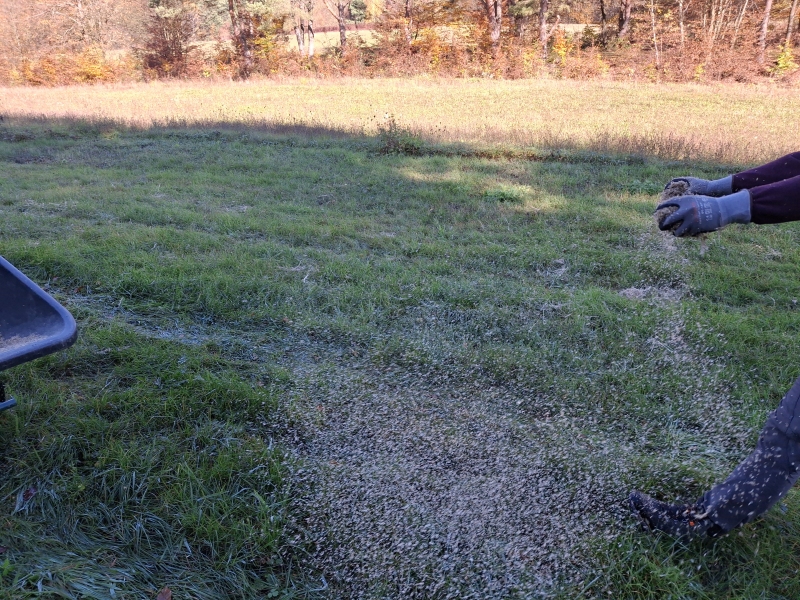
For the restoration of 2 hectares of meadows, we used carefully collected seed mixtures obtained from 4 hectares of diverse, species-rich meadows. The sowing was based on the assumption of 30 kilograms of seed material per hectare. The first harvest took place at the beginning of July, when most of the seeds were already well ripened, and the second followed in early September, when the later-flowering species had also matured. The collected seed material was air-dried in well-ventilated and dry spaces to preserve its quality and germination potential. After drying, the diverse seed mixture was carefully blended to create a uniform mix. The sowing was carried out by hand in autumn, ensuring an even distribution of seeds and a more natural restoration of the grass cover.